Tuesday 27th January 2026 11:00 – 13:00 GMT via Zoom
To register for the seminar, please use this link: https://us06web.zoom.us/webinar/register/WN_uYmgZgzJSRuNWIOg2JDsow

Introduction
The modern world is complex and modern healthcare is no exception. Patients increasingly present with multi-morbidities and long-term conditions, while demographic shifts and diverse expectations make standardised approaches inadequate. Effective delivery of care depends on successful collaboration across a large, dynamic and ever-evolving network of professions, services and organisations.
Systems thinking offers a powerful framework for designing integrated and resilient health systems. By viewing the workforce within a wider ecosystem—encompassing communities, education, technology, financing, and leadership—systems thinking enables policies that reflect real-world complexity, embedding agility and delivering more equitable care. By anticipating these system-wide impacts, systems thinking avoids siloed interventions and enables sustainable workforce improvements.
We’ll explore how systems thinking can help manage complexity, drive transformation, and support multidisciplinary models of care; addressing key questions such as:
- What is systems thinking, and how can it help us better understand and manage complexity in healthcare?
- How can systems thinking inform workforce planning at national and subnational levels?
- What governance and policy levers best support adaptive, collaborative and complex health systems?
- How can systems thinking enhance integrated care models and enable multi-disciplinary working?
- How do leaders shift their thinking from linear to non-linear, from control to influence, from reductionism to holism, from static to dynamic approaches, and from being the expert to becoming a collaboration facilitator?
Meet Our Chair
Crispin Scotter, Human Resources for Health Policy Advisor, WHO Europe
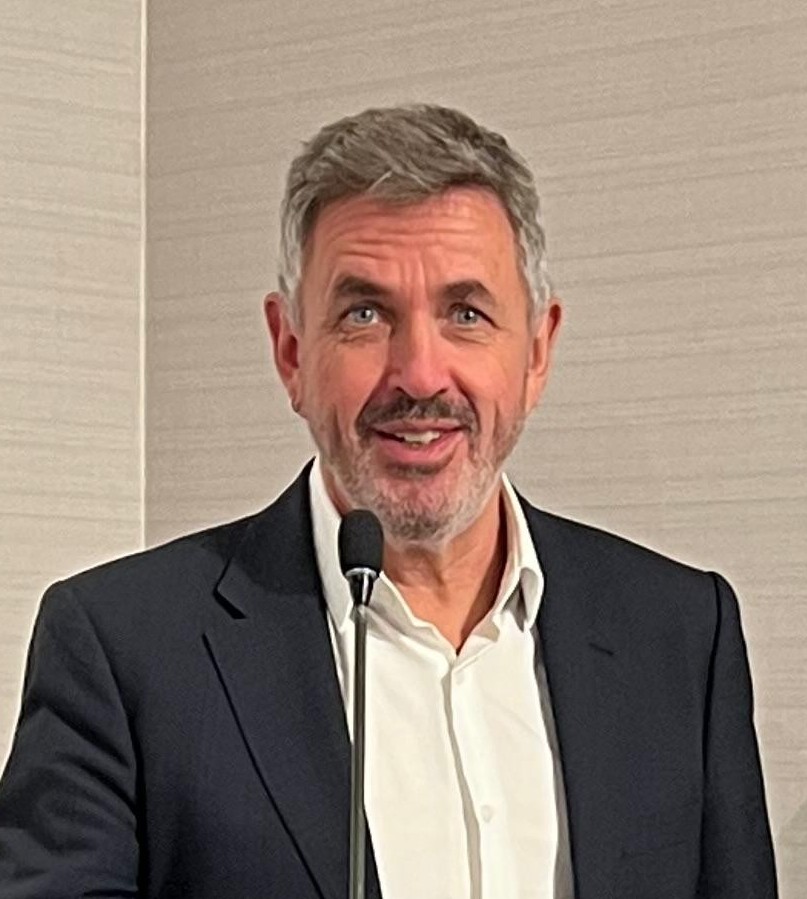
Crispin Scotter is a Policy Advisor at WHO in Copenhagen, focusing on digital capability and the future health and care workforce. His background includes senior roles in the UK’s Legal Services Commission and the Department of Health, following earlier private-sector experience in supply-chain management. He has supported workforce transformation in more than twenty countries and established the Northern and Western European Human Resources for Health (HRH) hubs. Crispin’s work includes workforce digital enablement, lifelong learning, and modern workforce models, including leadership of the 2025 HRH modelling symposium and contributions to EU initiatives such as the HEROES Joint Action (health workforce to meet health challenges).
Meet Our Seminar Panel
Professor Brian Castellani , Director of the Research Methods Centre & Co-Director of the Wolfson Research Institute for Health and Wellbeing at Durham University

Brian Castellani is Director of the Research Methods Centre and Co-Director of the Wolfson Research Institute for Health and Wellbeing at Durham University (UK), Visiting Professor at Nelson Mandela University (South Africa), Adjunct Professor of Psychiatry at Northeastern Ohio Medical University (US), and a Fellow of the UK National Academy of Social Sciences. His work focuses on improving public policy and health system performance through complexity-informed approaches, with extensive collaboration with the WHO, the NHS, and international partners on population health, environmental risk, and healthcare workforce resilience. He is co-author of The Atlas of Social Complexity, which underpins his work on best practices for evidence-informed decision-making in complex health and social systems.
Professor Wendy Reid MB.BS; FRCOG, Chair of Isle of Man’s Care Board, Non-Executive Director at Birmingham Women’s and Children’s Hospital, Non-Executive Director at Royal Free Hospital London
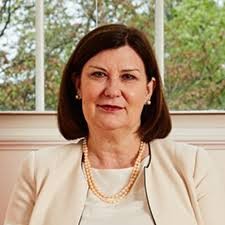
Wendy trained as an Obstetrician & Gynaecologist and held an academic consultant post at The Royal Free Hospital, London. She was a council member of the Royal College of O&G and was elected Vice President for a term of three years. Her interest in medical education and workforce planning led to her becoming Associate Dean and then Postgraduate Dean in London. Innovation in workforce planning and the evidence based reform of healthcare education has been a career theme and she developed and led the internationally acclaimed Hospital at Night programme and the implementation of safer working hours for doctors in training in England. As the inaugural National Medical Director for Health Education England, the largest single organisation for healthcare education, training and workforce planning worldwide, she led the development of training surveys for healthcare undergraduates, the support for doctors in training through quality assurance of training environments and the development of new roles including those supported by apprenticeships. Improving data and using evidence to raise the quality of education across all the professions underpins all these programmes.
Leila Reid MSc MPH, Director of Research & Operations at The Hepatitis C Trust (HCT)

Leila is Director of Research & Operations at The Hepatitis C Trust (HCT), a UK-based NGO that employs people with lived experience of exclusion from health services and supports them to work in the UK National Health Service. With oversight of both research and HR, she has a strong interest in how community and lived experience health workers can drive equity, access and ultimately better performance in health systems. Leila’s background is in Public Health; she has spent more than 15 years working on health and equalities in charity and government, is vice-chair of the UK Faculty of Public Health Special Interest Group on Drugs and serves on the Board of two international health and rights NGOs.
Dr Malixole Percy Mahlathi, Deputy Director General, National Department of Health, South Africa
Percy is an experienced administrator whose skills base includes strategy and policy development, organisational and leadership development, culture transformation, and health workforce strategy development / management. He possesses strategic and leadership capability that he puts to effective use in every situation that requires initiative and innovation. He played an important role in the development of various Human Resources for Health policies including in the development of the WHO Code of Practice for Recruitment of International Health Personnel. Percy is a Fellow of the Africa Leadership Initiative SA, a member of the Aspen Global Leadership Network. He is the secretary of the Strategic Dialogue Group, a progressive thought grouping (think tank). He also serves as the Chairman of uMthombo Wethemba Initiative (a high school alumni association).
Professor Naja Hulvej Rod, Professor of Epidemiology and Director of the Copenhagen Health Complexity Center at the University of Copenhagen

Naja Hulvej Rod is Professor of Epidemiology and Director of the Copenhagen Health Complexity Center at the University of Copenhagen. Her expertise spans various domains including sleep, health inequality, young adult health, and early life adversity, with a focus on health complexity and life course mechanisms. She has a particular interest in complex systems theory and how it intersects with methodological insights from causal inference theory. She has extensive expertise in working with longitudinal datasets and register-based research. Naja Hulvej Rod is PI of the Danish Life Course Cohort (DANLIFE) Study, which leverage multi-dimensional exposome data covering the totality of measured lifetime exposures across multiple social, environmental, and biological dimensions in 2 million people. She has participated in numerous boards and committees across Europe, and she has been awarded several prestigious grants and awards including the Elite Researcher Prize 2022 and an ERC consolidator grant.
More panellists will be announced in the coming weeks!